
The Last Two Verses of Surah Baqarah: Meaning, Benefits and Why They Protect You Every Night
Two verses the Prophet ﷺ said would suffice whoever recites them at night. Here are the last two verses of Surah al-Baqarah with transliteration and meaning, the hadith behind them, what they protect against, and how to use them every night.
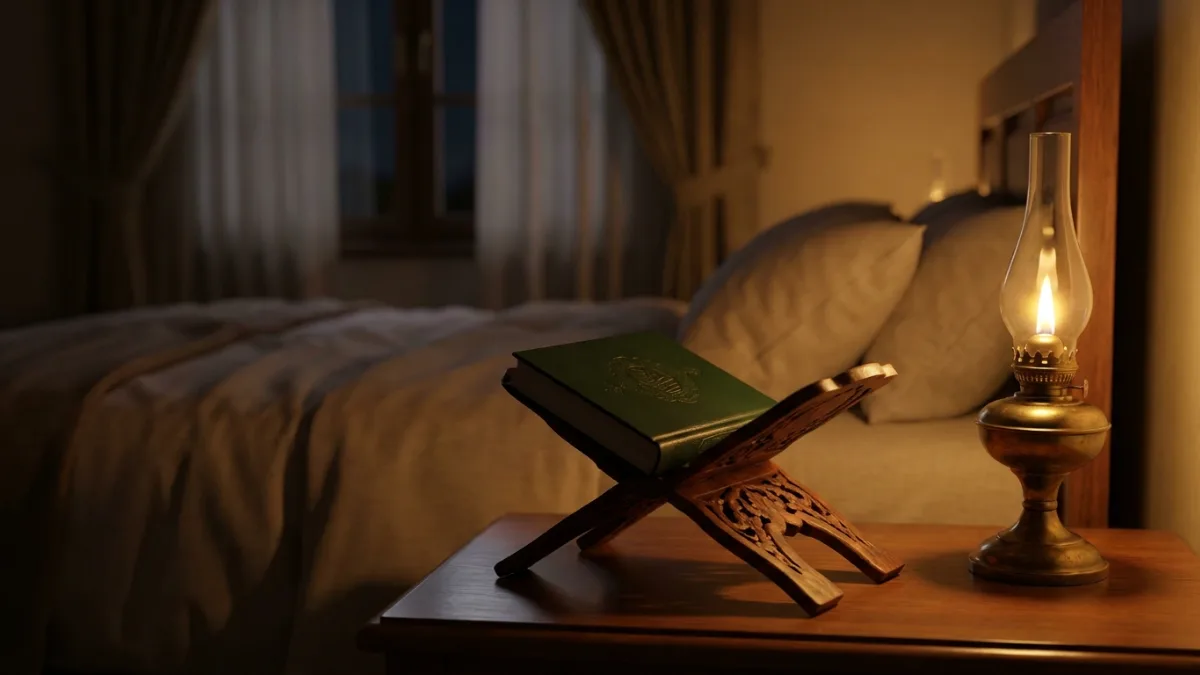
Of all the verses Muslims memorise for protection, three are recited more than any others at night: Ayat al-Kursi, and the last two verses of Surah Baqarah. The Prophet ﷺ said of these two that whoever recites them at night, they will suffice him. People know the promise and often do not know the words, the meaning, or what the sufficiency covers. This guide gives the verses in Arabic, transliteration and English, the hadith behind them, what the scholars understood by “suffice”, and how the Sheikh recommends using them for protection, sleep and ruqyah.
Quick answer
The last two verses of Surah al-Baqarah are 2:285-286, beginning Amana ar-Rasulu bima unzila ilayhi. The Prophet ﷺ said: “Whoever recites the last two verses of Surah al-Baqarah at night, they will suffice him” (Bukhari and Muslim). The scholars understood this as sufficiency against every harm that night, including Satan and the jinn, and as a sufficient night prayer and remembrance. They were given to the Prophet ﷺ on the Night Ascension and are described as from a treasure beneath the Throne.
In this guide
The last two verses of Surah Baqarah: text and meaning
The verses are the final two of the longest chapter of the Quran. Here they are in full.
Arabic (2:285): آمَنَ الرَّسُولُ بِمَا أُنزِلَ إِلَيْهِ مِن رَّبِّهِ وَالْمُؤْمِنُونَ ۚ كُلٌّ آمَنَ بِاللَّهِ وَمَلَائِكَتِهِ وَكُتُبِهِ وَرُسُلِهِ لَا نُفَرِّقُ بَيْنَ أَحَدٍ مِّن رُّسُلِهِ ۚ وَقَالُوا سَمِعْنَا وَأَطَعْنَا ۖ غُفْرَانَكَ رَبَّنَا وَإِلَيْكَ الْمَصِيرُ
Transliteration: Amana ar-Rasulu bima unzila ilayhi mir-Rabbihi wal-mu’minun. Kullun amana billahi wa mala’ikatihi wa kutubihi wa rusulih, la nufarriqu bayna ahadim-mir-rusulih. Wa qalu sami’na wa ata’na, ghufranaka Rabbana wa ilaykal-masir.
Meaning: “The Messenger believes in what was sent down to him from his Lord, and so do the believers. All believe in God, His angels, His books and His messengers: we make no distinction between any of His messengers. And they say: We hear and we obey; Your forgiveness, our Lord, and to You is the final return.”
Arabic (2:286): لَا يُكَلِّفُ اللَّهُ نَفْسًا إِلَّا وُسْعَهَا ۚ لَهَا مَا كَسَبَتْ وَعَلَيْهَا مَا اكْتَسَبَتْ ۗ رَبَّنَا لَا تُؤَاخِذْنَا إِن نَّسِينَا أَوْ أَخْطَأْنَا ۚ رَبَّنَا وَلَا تَحْمِلْ عَلَيْنَا إِصْرًا كَمَا حَمَلْتَهُ عَلَى الَّذِينَ مِن قَبْلِنَا ۚ رَبَّنَا وَلَا تُحَمِّلْنَا مَا لَا طَاقَةَ لَنَا بِهِ ۖ وَاعْفُ عَنَّا وَاغْفِرْ لَنَا وَارْحَمْنَا ۚ أَنتَ مَوْلَانَا فَانصُرْنَا عَلَى الْقَوْمِ الْكَافِرِينَ
Transliteration: La yukallifullahu nafsan illa wus’aha. Laha ma kasabat wa ‘alayha maktasabat. Rabbana la tu’akhidhna in nasina aw akhta’na. Rabbana wa la tahmil ‘alayna isran kama hamaltahu ‘alal-ladhina min qablina. Rabbana wa la tuhammilna ma la taqata lana bih. Wa’fu ‘anna, waghfir lana, warhamna. Anta Mawlana fansurna ‘alal-qawmil-kafirin.
Meaning: “God does not burden any soul beyond what it can bear. It has what it has earned, and against it is what it has earned. Our Lord, do not take us to task if we forget or make a mistake. Our Lord, do not lay upon us a burden like the one You laid upon those before us. Our Lord, do not burden us with more than we have the strength to bear. Pardon us, forgive us, and have mercy on us. You are our Protector, so help us against the people who deny the truth.”
The hadith: why they suffice
The promise comes from the Prophet ﷺ in a hadith recorded by both Bukhari and Muslim: “Whoever recites the last two verses of Surah al-Baqarah at night, they will suffice him.” The scholars gave several meanings of “suffice”, and the tradition holds all of them together.
- Sufficiency against harm. They protect the reciter that night from every evil, including Satan and the jinn, as Ayat al-Kursi does. This is the meaning most people have in mind.
- Sufficiency in worship. For one who could not pray the night prayer, they stand in its place as remembrance and dua.
- Sufficiency in faith. The two verses contain a complete statement of belief, obedience, and the asking of forgiveness, mercy and help; whoever has recited them has asked for everything he needs.
A second hadith, in Muslim, says these verses were given to the Prophet ﷺ on the Night Ascension (al-Mi’raj), with the five daily prayers, and that the believer who recites them is answered: every request in the second verse was granted. A third describes them as from a treasure beneath the Throne. That is why the companions treated them as among the most precious verses to keep.
What they protect against
Practitioners of ruqyah use the last two verses of al-Baqarah alongside Ayat al-Kursi in almost every case, and for specific reasons.
| Use | Why these verses |
|---|---|
| Protection at night from Satan and jinn | The hadith promises sufficiency for the night; Surah al-Baqarah as a whole is the surah Satan flees from |
| Against sorcery and the evil eye | The chapter they close contains the Quran’s main teaching on magic (2:102) and the strongest protective verses; the two are recited in every ruqyah for sihr |
| Against fear, anxiety and heaviness of heart | The second verse is a direct dua: do not burden us beyond our strength, pardon us, forgive us, have mercy on us, help us |
| In a troubled home | Recited with Ayat al-Kursi in each room, and as part of the daily recitation of al-Baqarah for a home with signs of jinn |
| For the sick and the afflicted | Recited over water for drinking and washing, and over the person, as part of ruqyah |
The verses are not a charm. Their protection comes from the One they address, and the hadith ties it to reciting them, not to writing or wearing them. For the related promise about Ayat al-Kursi, read Ayat al-Kursi benefits.
How to use the last two verses every night
The routine the Sheikh recommends is the Sunnah’s own, and it takes under five minutes.
- Make wudu before sleep.
- Lie on your right side.
- Recite Ayat al-Kursi, then the last two verses of al-Baqarah, then al-Ikhlas, al-Falaq and an-Nas three times, blowing into your palms and wiping over your face and body.
- Say the sleeping dua: Bismika Allahumma amutu wa ahya.
- For a child, recite them with your hand on the child’s head.
- For a troubled home, add them to the daily recitation of Surah al-Baqarah, and recite them over water sprinkled in the rooms.
Learn the two verses by heart; it takes most people a week. If you suspect something more than ordinary unease, the eye, magic or jinn, keep the routine and describe what is happening to Sheikh Kamal Elhidi on the consultation page. These verses are part of every treatment he prescribes, but the treatment depends on the cause.
Not sure what you’re dealing with?
Describe your situation to Sheikh Kamal Elhidi. He reads every message himself — free, private, and with no obligation.
How the Sheikh approaches it
The Sheikh teaches the last two verses of al-Baqarah to almost everyone who comes to him, because they belong in every protection routine and every ruqyah. He asks people to learn them, not only to play them, and to recite them with presence rather than speed.
Where a person is afflicted, he builds on them with the verses specific to the eye, magic or jinn, and a routine for the home. He does not write them as amulets or sell them in any form; the protection is in the recitation and in the One it addresses.

About the Sheikh. Sheikh Kamal Elhidi is a practitioner of traditional ruqyah and spiritual diagnosis. Every article on this guide is written with his direct guidance and reviewed with him before publishing. Learn more about the Sheikh and how he works.
Looking for a calm end to your day? Our partner PuraTarot offers a personal reflection session, the Quiet Mind Reflection Ritual, a quiet space to set down your worries and look at your own choices. It is a personal reflection, not a diagnosis or a treatment, so for the spiritual side, the recitation above and the Sheikh’s guidance remain your reference. Join the free Curse Removal Guide newsletter and, once you confirm, you will unlock a 50% code for your first PuraTarot session.
Frequently asked questions
What are the last two verses of Surah Baqarah?
Verses 285 and 286, beginning Amana ar-Rasulu bima unzila ilayhi. The first is a statement of faith in God, His angels, books and messengers; the second is a dua asking God not to burden us beyond our strength and to pardon, forgive, have mercy on and help us.
What did the Prophet ﷺ say about the last two verses of Surah Baqarah?
That whoever recites them at night, they will suffice him (Bukhari and Muslim). Another hadith says they were given to him on the Night Ascension and that every request in them is answered, and another describes them as from a treasure beneath the Throne.
What does “they will suffice him” mean?
Scholars understood it as sufficiency against every harm that night, including Satan and the jinn; as sufficient worship for one who could not pray the night prayer; and as a complete statement of faith and dua that asks for everything a believer needs.
Do the last two verses of Surah Baqarah protect from black magic and jinn?
They are recited in every ruqyah for sihr, the evil eye and jinn, together with Ayat al-Kursi and the three surahs, and they close the surah that Satan flees from. Their protection comes from God through recitation, not from writing or wearing them.
When should I recite the last two verses of Surah Baqarah?
Every night before sleep, after Ayat al-Kursi and before the three surahs, with wudu and lying on your right side. They can also be recited over a child, over water, and in each room of a troubled home.
Further reading
- The Clear Quran (Dr. Mustafa Khattab): A clear modern English translation for reading these verses in context.
- The Book of Remembrances (Kitab al-Adhkar): Imam an-Nawawi’s classic collection of daily remembrances from the Sunnah.
- Fortress of the Muslim (Hisn al-Muslim): Authentic supplications from the Quran and Sunnah for morning, evening and sleep.
As an Amazon Associate we earn from qualifying purchases.
What the Sheikh usually prescribes for this
There is no single remedy that fits every case — the same signs can come from the evil eye, from sihr, or from nothing spiritual at all. That is why Sheikh Kamal Elhidi always asks about your situation first, then tells you plainly what he sees and what he would do.
If you would like his view on your own case, describe it below. He reads every message himself — free, private, and with no obligation.
Reader reviews
Did this guide help you? Leave a short, honest review so other readers know what to expect. Reviews are checked before they appear.
There are no reviews yet. Be the first one to write one.


