How to Do Ruqyah on Yourself: A Step-by-Step Self-Ruqyah Guide (and the Signs It’s Working)
You do not need anyone's permission to recite the Quran over yourself. Here is how to do ruqyah on yourself step by step: the preparation, the verses in order, the method with the hands, water and oil, how often, the signs it is working, and when to ask a Sheikh.
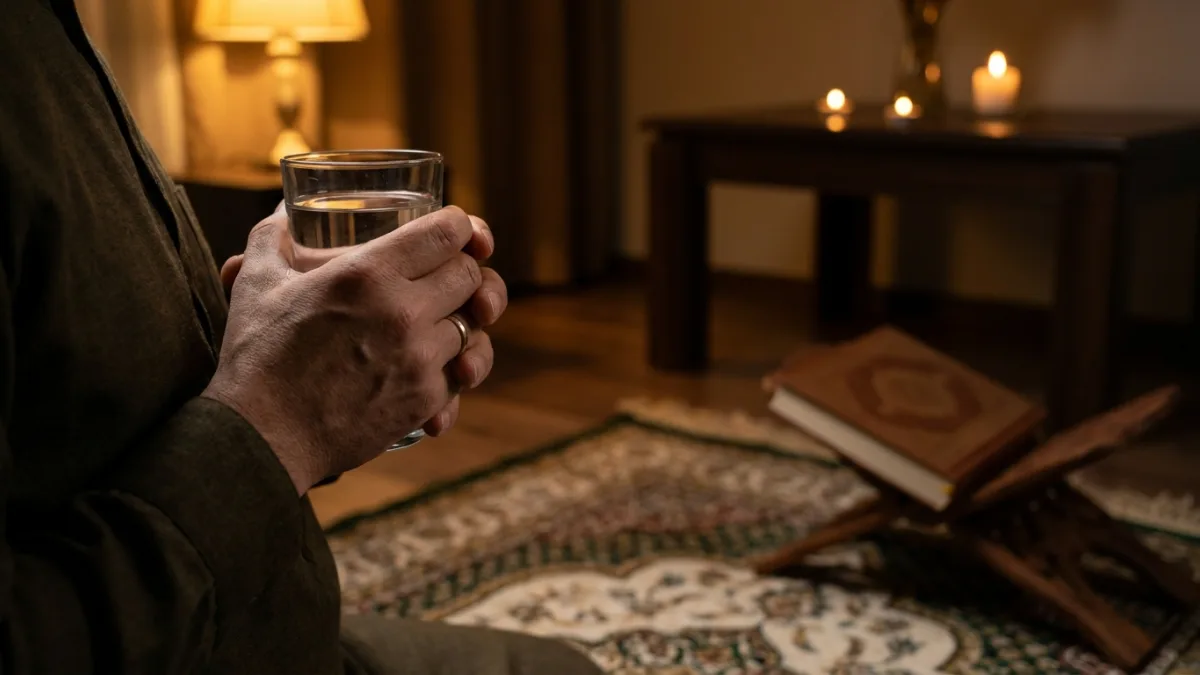
You suspect the eye, or magic, or a jinn, or you simply feel heavy and want to do something tonight rather than wait. The good news is that the strongest treatment in the tradition is available to you right now, in your own voice. The Prophet ﷺ performed ruqyah on himself every night, and the companions performed it on themselves and on each other. This guide explains how to do ruqyah on yourself: the preparation, the exact verses in a sensible order, the method with the hands, water and oil, how often to repeat it, the reactions that show it is working, and the point at which you should bring in a Sheikh.
Quick answer
Self-ruqyah is reciting the Quran over yourself for healing and protection. Make wudu, sit facing the qiblah, place your right hand on your chest or the painful place, and recite al-Fatihah, Ayat al-Kursi, the last two verses of al-Baqarah, the verses against magic (Yunus 81-82, al-A’raf 117-122, Taha 69) and the three surahs, blowing lightly over your body and into water for drinking and washing. Repeat morning and evening for at least two weeks. Reactions such as yawning, tears, heat, drowsiness or shifting pain that fade over sessions are signs it is working.
In this guide
Before you begin: what self-ruqyah is and is not
Ruqyah is the Quran, the names of God and the duas of the Prophet ﷺ recited over a person for healing. The Prophet ﷺ permitted it on three conditions: it is in the words of the Quran, the names of God or the Sunnah; it is in a language that is understood; and it is believed to work only by God’s permission. Anything added to it, numbers, symbols, unknown words, knots, objects, or the names of mothers, is not ruqyah.
Three things to settle before you start. First, intention: you are asking God to heal and protect, and the words are the means. Second, expectation: ruqyah is treatment, not magic; it works over days and weeks, and for some cases needs more than one person can do alone. Third, medicine: see a doctor for anything physical. The tradition uses both; ruqyah does no harm alongside treatment and never replaces it. Our ruqyah guide covers the background in more depth.
How to do ruqyah on yourself: the method
- Make wudu. Not a condition, but the Sunnah, and it settles the heart.
- Sit or lie quietly, facing the qiblah if you can, in a clean place with no music or television. Early morning and before sleep are the best times.
- Place your right hand on your chest, or on the place that hurts, as the Prophet ﷺ taught the one in pain to do.
- Recite with presence, in Arabic if you can (learn the meaning so you know what you are asking), audibly, not rushed. Recite each item once unless noted; repeat the three surahs three times.
- Blow lightly (a light breath with a little moisture) over your chest and body after each surah or group of verses, and into your palms, then wipe over your face, head and body.
- Recite into water at the end of the session, with your mouth close to the surface, then drink from it over the day and wash or bathe with the rest. You may also recite into olive oil or black seed oil and rub the body, especially the painful places.
- Close with dua: ask God for healing, protection and relief in your own words.
- Repeat morning and evening for at least two weeks, longer for magic or jinn. Consistency is most of the treatment.
A full session takes twenty to thirty minutes. If you cannot manage all the verses, do al-Fatihah, Ayat al-Kursi and the three surahs every day without fail; a short session done daily is worth more than a long one done twice.
The verses to recite, in order
These are the verses practitioners use most, grouped by what they address. Recite the first group always; add the second, third or fourth according to what you suspect.
| Group | Verses | What they address |
|---|---|---|
| Foundation (always) | Al-Fatihah; Ayat al-Kursi (2:255); al-Baqarah 2:1-5, 2:102, 2:163-164, 2:285-286; al-Ikhlas, al-Falaq and an-Nas, three times each | Every case: protection, the eye, magic, jinn, whispering |
| Against magic (sihr) | Al-A’raf 7:117-122; Yunus 10:81-82; Taha 20:69 | The verses in which God annuls the sorcerers’ work; the core of treatment for black magic |
| Against jinn and possession | Al-Mu’minun 23:115-118; as-Saffat 37:1-10; al-Ahqaf 46:29-32; ar-Rahman 55:33-36; al-Hashr 59:21-24; al-Jinn 72:1-9 | Verses that address the jinn, their limits, and the authority of God over them |
| Against the evil eye and envy | Al-Qalam 68:51-52; al-Falaq; the dua Bismillahi arqika min kulli shay’in yu’dhika, min sharri kulli nafsin aw ‘aynin hasidin, Allahu yashfika, bismillahi arqika | The eye and the envier; see the dua for evil eye |
| For fear, whispering and heaviness | An-Nas; al-Inshirah 94; the dua La ilaha illa Anta, subhanaka, inni kuntu minaz-zalimin; Allahumma Rabban-nas, adhhibil-ba’s, ishfi Antash-Shafi | Waswas, anxiety, the heaviness of a spiritual attack |
Print the verses or keep them on your phone with the meaning beside them. Reciting with understanding is a condition of ruqyah, and it also changes how the heart engages.
Signs ruqyah is working, and when to ask a Sheikh
People stop too early because they do not know what to expect. Those who treat the afflicted describe a recognisable course.
- Reactions during recitation in the first days: yawning, tears, heat or cold, drowsiness, a racing heart, nausea, headache, pain that moves from place to place, or sudden anger or distress. These are not harm; they are the sign that something is reacting to the Quran, and they fade over sessions.
- Changes in sleep and dreams: nightmares of snakes, dogs or dark figures intensify briefly and then stop; sleep deepens.
- Physical release: belching, vomiting, sweating, a bowel movement, a boil or a rash that then clears; practitioners read these as the body expelling what was eaten or placed.
- Easing of the main complaint: the heaviness lifts, the headache stops, appetite returns, the aversion to prayer or to a spouse fades.
- No reaction at all, with no change, over two weeks: this usually means the cause was not spiritual, which is good news, and the problem belongs to a doctor, a counsellor or ordinary patience.
Bring in a Sheikh when any of these is true: the reactions are severe (loss of consciousness, violent movements, a changed voice), which suggests possession and should not be handled alone; magic is strongly suspected and the medium needs to be found; the person is a child or cannot recite; or two to three weeks of daily sessions have produced reactions but no improvement. At that point describe the whole picture, what you suspect, how long you have recited, and exactly what happens during sessions, to Sheikh Kamal Elhidi on the consultation page. He will tell you what it looks like and what he would do.
Not sure what you’re dealing with?
Describe your situation to Sheikh Kamal Elhidi. He reads every message himself — free, private, and with no obligation.
How the Sheikh approaches it
The Sheikh encourages self-ruqyah in almost every case, because the person’s own recitation, done daily, is often what carries the treatment between sessions. He asks what the person recites, how, and what happens, and corrects the common mistakes: rushing, skipping the method with the hands and water, stopping after three days, or adding things that are not ruqyah.
He steps in for the cases that need more: possession, magic whose medium must be found, and cases where reactions continue without improvement. He never promises an outcome, never adds anything to the Quran and the Sunnah, and asks that medical care continue alongside.

About the Sheikh. Sheikh Kamal Elhidi is a practitioner of traditional ruqyah and spiritual diagnosis. Every article on this guide is written with his direct guidance and reviewed with him before publishing. Learn more about the Sheikh and how he works.
Want a quiet space to reflect beside your recitation? Our partner PuraTarot offers a personal reflection session, the Quiet Mind Reflection Ritual, for thinking calmly about your worries and your own situation. It is a personal reflection, not a diagnosis or a treatment, so for the spiritual side, follow the steps above and the Sheikh’s guidance. Join the free Curse Removal Guide newsletter and, once you confirm, you will unlock a 50% code for your first PuraTarot session.
Frequently asked questions
Can I do ruqyah on myself?
Yes. The Prophet ﷺ performed ruqyah on himself every night, reciting the three surahs into his palms and wiping over his body, and the companions performed it on themselves. Self-ruqyah is reciting the Quran and the Sunnah duas over yourself with the intention of healing and protection.
How do I perform ruqyah on myself step by step?
Make wudu, sit facing the qiblah, place your right hand on your chest or the painful place, recite al-Fatihah, Ayat al-Kursi, the last two verses of al-Baqarah, the verses against magic and the three surahs with presence, blow lightly over your body and into your palms and wipe, recite into water to drink and wash with, close with dua, and repeat morning and evening.
How do I make ruqyah water?
Recite the ruqyah verses with your mouth close to the surface of clean water, blowing lightly into it after each group of verses. Drink from it over the day and wash or bathe with the rest. You can do the same with olive oil or black seed oil for rubbing the body.
What are the signs that ruqyah is working?
Reactions during recitation such as yawning, tears, heat, drowsiness, nausea, headache or pain that moves, which fade over sessions; nightmares that briefly intensify then stop; physical release such as belching, sweating or vomiting; and the easing of the main complaint. No reaction and no change over two weeks usually means the cause was not spiritual.
How long should I do self-ruqyah?
Morning and evening for at least two weeks, longer for suspected magic or jinn. If reactions are severe, if magic is strongly suspected, or if two to three weeks bring reactions but no improvement, bring in a knowledgeable Sheikh.
Further reading
- The Clear Quran (Dr. Mustafa Khattab): A clear modern English translation for understanding the verses you recite.
- Fortress of the Muslim (Hisn al-Muslim): Authentic supplications from the Quran and Sunnah for morning, evening and sleep.
- Healing with the Medicine of the Prophet: Ibn al-Qayyim on Quranic and Prophetic healing, including the evil eye and sihr.
As an Amazon Associate we earn from qualifying purchases.
What the Sheikh usually prescribes for this
There is no single remedy that fits every case — the same signs can come from the evil eye, from sihr, or from nothing spiritual at all. That is why Sheikh Kamal Elhidi always asks about your situation first, then tells you plainly what he sees and what he would do.
If you would like his view on your own case, describe it below. He reads every message himself — free, private, and with no obligation.
Reader reviews
Did this guide help you? Leave a short, honest review so other readers know what to expect. Reviews are checked before they appear.
There are no reviews yet. Be the first one to write one.