Evil Eye Protection: Bracelets, Prayers and What a Sheikh Uses
A calm guide to evil eye protection: what bracelets, prayers, adhkar, taweez and the hamsa really are, where each comes from, and a simple daily routine you can keep.

You wear the blue bead, you say your morning words when you remember, and you still catch yourself wondering whether it is enough. Maybe someone praised your baby, your new home or your success, and the next week felt heavy. Or you simply want to be careful, the way your grandmother was.
Good evil eye protection is not complicated, but it helps to know what each tool really is and where it comes from. This guide walks through bracelets, prayers and what a Sheikh recommends, calmly and without fear.
Quick answer
The strongest evil eye protection in the Islamic tradition is the simple daily one: Ayat al-Kursi, Surat al-Ikhlas, al-Falaq and an-Nas, and the morning and evening adhkar, recited with trust in Allah. Bracelets, nazar beads and the hamsa are cultural symbols. They are not a substitute for prayer.
What evil eye protection really means
In the Islamic tradition, the evil eye (al-ayn) is treated as real. The Prophet ﷺ said that it is true, and he taught specific words to seek refuge from it. So protection starts with remembering Allah, not wearing an object. That thread runs through everything below.
The evil eye is usually explained as a harmful glance that comes from envy, or from admiration that forgets to mention Allah. It is not always meant with hatred. Often the person has no idea they did anything at all.
That is why traditional protection from evil eye works in two directions. You guard yourself with daily words of refuge, and you train your own tongue to bless what you see. Both are simple, and both are older than any charm.
One honest note before we go on. Tiredness, worry, poor sleep and health problems can look exactly like the things people blame on the evil eye. This can also be ordinary stress, sleep or health issues, so rule that out first.
If you are unsure what you are noticing, our guide to the signs of the evil eye explains what is traditionally observed, and what is not.
Evil eye protection compared: origin, purpose and limits
Not every form of protection has the same source. Some come directly from the Quran and Sunnah. Others are cultural habits that grew over centuries. Here is a plain comparison.
| Protection | Origin | What it does / what it doesn’t |
|---|---|---|
| Bracelet or nazar bead | Ancient Mediterranean and Middle Eastern folk tradition, older than Islam | Acts as a reminder and a cultural symbol. It has no basis in the Quran or Sunnah and no power of its own. |
| Ayat al-Kursi and the three Quls | The Quran (2:255, then surahs 112, 113 and 114); recited by the Prophet ﷺ for protection | Words of refuge in Allah, the heart of traditional protection. They ask for protection and do not guarantee outcomes. |
| Morning and evening adhkar | The Sunnah, collected in books such as Hisn al-Muslim | A daily habit of remembrance that works through consistency. It does not replace dealing with real causes like poor sleep or conflict. |
| Taweez | Traditional written protection, often with Quranic verses; scholars differ on its ruling | Some scholars allow verses only, others discourage wearing anything. It is not a shield to lean on instead of prayer. |
| Hamsa | Hand-shaped symbol from North Africa and the Middle East, known in Morocco as the khamsa or Hand of Fatima | Cultural art and folk symbol. It has no Islamic textual basis, so treat it as decoration. |
Notice the pattern. The further you move down the table from the Quran, the more an item becomes a symbol, and the less you should lean on it. Words of refuge come first, and symbols are optional.
Evil eye bracelet meaning and nazar protection
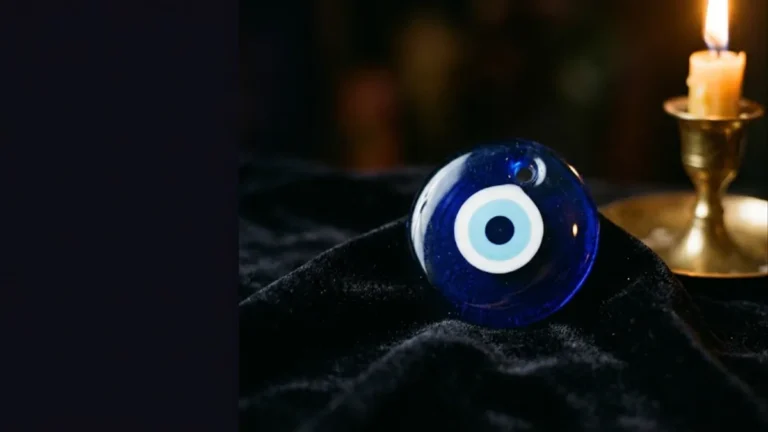
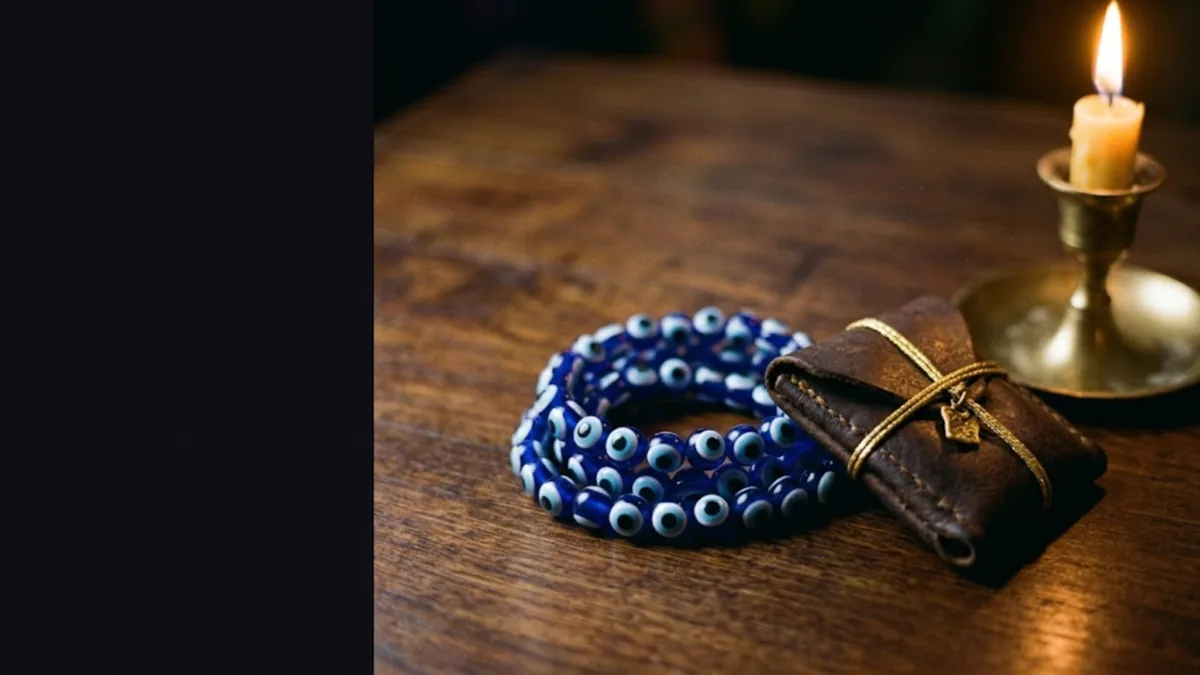
The evil eye bracelet usually carries a blue glass bead shaped like an eye, known as a nazar. The folk idea is that the bead looks back at an envious glance and absorbs it.
That is the evil eye bracelet meaning in most cultures, and it is worn across Turkey, Greece, the Levant and North Africa by people of many faiths.
So how should you treat it? Many Muslims wear a nazar as jewelry and nothing more. The traditional caution from scholars is about belief. If you feel the bead itself protects you, your trust has moved from Allah to an object. The trust matters more than the object, and nazar protection only makes sense as a reminder.
If a nazar cracks or breaks, people say it took a hit for you. That is folk belief, not a ruling, and a broken bead is not a sign you are in danger. Replace it if you like, or simply let it go.
Taweez and the hamsa
A taweez is a different matter. It is a written protection prepared by a person, so its content and intention matter a great deal, and scholars hold different views on it. Our guide on what a taweez is and how it is used explains the traditional picture.
The hamsa is simpler. In Morocco you see it on doors, walls and jewelry, and it is generally understood as tradition and decoration. Enjoy it as heritage, and keep your protection in your prayers.
Protection from evil eye: a daily routine you can keep
This is the kind of routine traditional teachers recommend, and it fits into an ordinary day. You do not need to do everything perfectly. Consistency matters more than length, so start with what you can keep.
Daily protection routine
- Morning: recite Ayat al-Kursi once, then Surat al-Ikhlas, al-Falaq and an-Nas three times each.
- Add the morning adhkar you know, even a few, read slowly and with attention.
- Before leaving home: say “Bismillah, tawakkaltu ala Allah, wa la hawla wa la quwwata illa billah.”
- When you admire something, a child, a home or someone’s success: say “Masha Allah, la quwwata illa billah.”
- Share big news with people you trust, not with everyone at once.
- Evening: recite the evening adhkar and the three Quls again, three times each.
- Before sleep: recite Ayat al-Kursi, then the three Quls, blow lightly into your cupped hands and wipe them over your body, as the Prophet ﷺ did.
- For children: use the Prophet’s ﷺ words of refuge for Hasan and Husayn, “A’udhu bi kalimatillahit-tammati min kulli shaytanin wa hammatin wa min kulli aynin lammah.”
- Look after the basics: pray on time, sleep enough and eat properly. A tired body makes everything feel heavier.
If you are not fluent in Arabic, start with a translation and learn one surah at a time. To understand the verse at the centre of this routine, read about the benefits of Ayat al-Kursi.
What people usually try — and why it often isn’t enough
Most people start with what is close at hand. They buy a bracelet, hang a nazar at the door, recite what they remember, or ask a relative for advice. Some add incense, salt, or a taweez from someone they barely know. These efforts come from a good place, and the recitation in particular has real value.
The trouble is what happens next. A bead cannot be adjusted to your situation. Recitation done once, with worry in the heart, is not the same as a steady routine. And if what you feel is not the evil eye at all, generic protection keeps you busy without answering the real question.
That is why many people feel stuck. They are doing the right things, but they have no clear picture of what they are dealing with. Protection is the foundation, yet it is not the same as understanding your case. You can read more in our evil eye section.
Not sure what you’re dealing with?
Describe your situation to Sheikh Soussi Elyahoudi. He reads every message himself — free, private, and with no obligation.
How the Sheikh approaches it
Every case is different, so the Sheikh does not hand out one answer to everyone. He begins by asking about your situation first: what you have noticed, since when, how your days and sleep look, and what else is happening in your life. He listens before he says anything.
Then he tells you plainly what he sees. Sometimes that is the evil eye. Sometimes it is something else, and sometimes it is ordinary stress, and he will say so. He does not promise outcomes and he does not try to frighten you.
His guidance follows the Islamic tradition of ruqyah and remembrance, and it is explained in simple terms so you know what to do next. If you would like that conversation, you can consult the Sheikh and describe your situation in your own words.
About the Sheikh. Sheikh Soussi Elyahoudi is a practitioner of traditional ruqyah and spiritual diagnosis. This guide is written by Walid Faiz with his direct guidance, and every article is reviewed with him before publishing — read more.
Frequently asked questions
What is the best protection from the evil eye?
In the Islamic tradition, the best protection is remembrance of Allah: Ayat al-Kursi, Surat al-Ikhlas, al-Falaq and an-Nas, and the morning and evening adhkar, recited daily. Saying “Masha Allah” when you admire something also helps. Bracelets and beads are optional symbols. They do not replace these words, and no protection is a guarantee.
Does an evil eye bracelet really work?
An evil eye bracelet is a cultural symbol, not a proven or Quranic form of protection. It may serve as a reminder to be mindful and to say your daily words of refuge. Scholars caution against believing the bead itself has power, so rely on Allah and treat the bracelet as jewelry.
Can a Muslim wear a nazar bracelet?
Views differ. Many Muslims wear a nazar purely as jewelry, while some scholars advise against it because it can shift trust from Allah to an object. If you wear one, do not believe it protects or harms by itself. If you feel unsure, leaving it aside is a perfectly safe choice.
How often should I recite Ayat al-Kursi for protection?
Tradition recommends it in the morning, in the evening and before sleep, along with the three Quls. Reciting once with presence and understanding is better than many rushed repetitions. Keep it steady each day rather than doing a lot for a week and then stopping.
What is the difference between a nazar, a hamsa and a taweez?
A nazar is a blue eye-shaped bead and a hamsa is a hand-shaped symbol. Both are cultural folk traditions. A taweez is a written protection, often with Quranic verses, made by a person, and scholars differ on its ruling. None of them replaces prayer and daily remembrance.
What the Sheikh usually prescribes for this
There is no single remedy that fits every case — the same signs can come from the evil eye, from sihr, or from nothing spiritual at all. That is why Sheikh Soussi Elyahoudi always asks about your situation first, then tells you plainly what he sees and what he would do.
If you would like his view on your own case, describe it below. He reads every message himself — free, private, and with no obligation.