
Is the Evil Eye Good Luck? What the Symbol, Its Colors and a Broken Bead Really Mean
People buy the blue eye for luck without knowing what it stands for. Here is whether the evil eye is good or bad luck, what every color means, what a broken bead means, and what actually protects you.
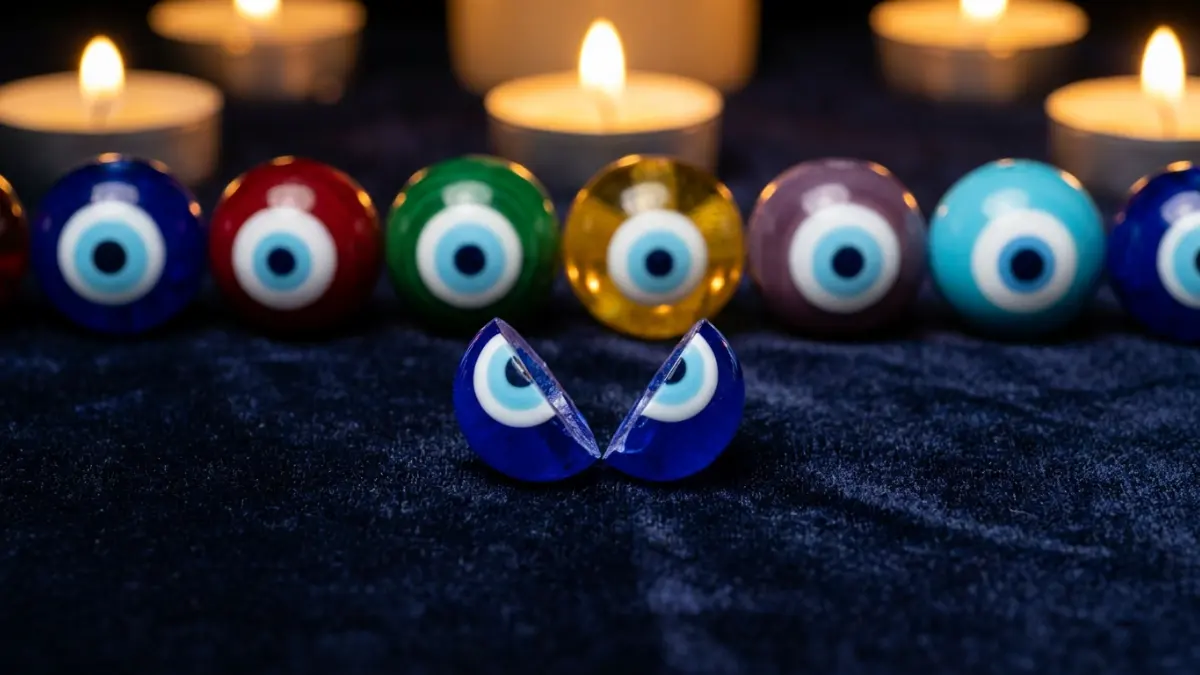
You were gifted a blue eye bracelet, or you keep seeing the symbol and like it, and now you want to know: is the evil eye good luck, or is it something to be careful with? The honest answer is “neither, exactly”. The eye is not a lucky charm and it is not a curse. It is a shield that people have used for thousands of years against a very specific thing. This guide explains what wearing it means, what the colors stand for, what it means when the bead breaks, and what actually keeps you safe.
Quick answer
The evil eye symbol is not good luck in itself and it is not bad luck to wear. It is a protective charm (a nazar) meant to deflect envious looks, so people experience it as “good luck” because it is meant to stop bad luck. The classic color is blue; other colors carry cultural meanings such as red for courage and green for health. In the Islamic view, the bead has no power of its own; protection comes from remembrance of God.
In this guide
Is the evil eye good luck or bad luck?
The confusion comes from the name. “The evil eye” is the harm: an envious look that is believed to bring illness, loss or misfortune. The blue eye charm is the defence against it. So wearing an evil eye is not inviting evil; it is a way of saying “I know envy is real and I am guarding against it”. That is why so many people describe it as lucky.
Across the Mediterranean and the Middle East, giving someone a nazar is a kind act. It is placed on newborns, new cars, new homes and new shops, precisely the things most likely to attract envy. Nobody considers it bad luck to receive one. The only “bad luck” belief attached to it is that you should not buy one for yourself if you can help it; tradition prefers it to be given, though this is custom rather than rule.
If what you really want to know is whether the eye has touched you, not whether the symbol is lucky, start with the signs of evil eye.
What the evil eye colors mean
The original nazar is blue because, in the ancient Mediterranean, light eyes were rare and were thought to give the eye; a blue bead was believed to “watch back”. Modern jewellery has added a palette, and each color has acquired a cultural meaning. These are customs, not scripture, but they are widely shared. The hand-shaped symbol often seen beside it has its own story, which we cover in our guide to the hamsa hand meaning.
| Color | Traditional meaning |
|---|---|
| Dark blue | General protection, calm, the classic nazar |
| Light blue | Peace, broad protection, openness |
| Red | Courage, energy, protection in love and from fear |
| Green | Health, growth, success in new ventures |
| Yellow / gold | Clear thinking, relief from exhaustion, protection of health |
| Purple | Balance, imagination, removing obstacles |
| Pink | Friendship, calm, protection of relationships |
| White | Purity, fresh starts, clearing clutter in the mind |
| Black | Power, protection from negative energy, removing bad luck |
| Orange | Happiness, motivation, creativity |
If you are choosing one, choose by what you like. The tradition behind the nazar never depended on color; it depended on the belief that envy can be deflected.
What it means when your evil eye breaks or falls off
This is the most common question people bring to us. Folk belief says that if the bead cracks, the bracelet snaps or the eye falls off, it has absorbed a glance meant for you and sacrificed itself. Many people quietly thank it, dispose of it respectfully, and replace it.
Two honest notes. First, glass beads and elastic cords break, and that is the usual reason. Second, in the Islamic tradition the bead has no power to absorb anything, so a broken bead is not a sign of an attack; it is a reminder to check how you have been feeling and to return to your daily recitations. If you notice the broken bead together with the sudden changes described in our evil eye guide, treat the symptoms, not the bracelet.
What actually protects you
Whatever you wear, the protection the tradition trusts is not an object. The Prophet ﷺ confirmed that the evil eye is real, and then gave the means: saying mashallah when admiring anything, reciting Ayat al-Kursi and the last three surahs morning and evening, and specific duas for the evil eye. Some scholars discourage amulets altogether; others allow them as cultural reminders as long as the heart relies on God alone.
Our practical comparison of bracelets, prayers and what a Sheikh uses is in evil eye protection. If you think the eye has already touched you, a bead will not undo it; the method in how to remove evil eye will, and if you are unsure what you are dealing with, you can describe your situation to Sheikh Kamal Elhidi on the consultation page.
Not sure what you’re dealing with?
Describe your situation to Sheikh Kamal Elhidi. He reads every message himself — free, private, and with no obligation.
How the Sheikh approaches it
When someone asks the Sheikh about a bracelet, he usually turns the question gently back to the person: how have you been, what changed, why did you start worrying? The symbol is rarely the real subject.
If there is nothing wrong, he says so and reminds them of the daily recitations, which cost nothing and protect more than any bead. If there is a pattern that fits the eye or something heavier, he explains what it is and what he would do. He does not sell charms and does not tell people that any object will keep them safe.

About the Sheikh. Sheikh Kamal Elhidi is a practitioner of traditional ruqyah and spiritual diagnosis. Every article on this guide is written with his direct guidance and reviewed with him before publishing. Learn more about the Sheikh and how he works.
Wondering why the worry stays with you? Beyond the beads and symbols, some readers find it more useful to reflect on the people and moments that leave them feeling drained or watched. Our partner PuraTarot offers a Grounding and Personal Boundaries Ritual for that, a personal reflection, not a diagnosis or a treatment. For the spiritual side, follow the steps above and the Sheikh’s guidance. Join the free Curse Removal Guide newsletter and, once you confirm, you will unlock a 50% code for your first PuraTarot session.
Frequently asked questions
Is it good luck to wear an evil eye?
It is considered protective rather than lucky. The charm is meant to deflect envious looks, so people experience it as good luck because it is believed to stop bad luck. It is not bad luck to wear.
Is it bad luck to buy an evil eye for yourself?
Custom in many cultures says it should be given rather than bought, but this is folk tradition, not a rule. Many people buy their own and nothing in the tradition says that harms them.
Which evil eye color is best?
The classic protective color is dark blue. Other colors carry cultural meanings: red for courage, green for health, black for negative energy. Choose the one that suits you; the tradition never depended on color.
What does it mean when your evil eye bracelet breaks?
Folk belief says it absorbed an envious glance meant for you and can be replaced. In practice beads and cords break. In the Islamic view the bead has no power, so a broken one is simply a reminder to check how you have been feeling and keep your recitations.
Does the evil eye bracelet really protect you?
Culturally, yes; spiritually, the Islamic tradition says the bead has no power of its own and relying on it is discouraged. Real protection comes from saying mashallah, Ayat al-Kursi, the last three surahs and the duas taught by the Prophet ﷺ.
Further reading
- The Evil Eye: A Casebook: Alan Dundes’s collection of studies on the evil eye across cultures.
- Fortress of the Muslim (Hisn al-Muslim): Daily remembrances and du’as from the Sunnah, with sources.
- Healing with the Medicine of the Prophet: Ibn Qayyim al-Jawziyya on Prophetic remedies, including the evil eye.
As an Amazon Associate we earn from qualifying purchases.
What the Sheikh usually prescribes for this
There is no single remedy that fits every case — the same signs can come from the evil eye, from sihr, or from nothing spiritual at all. That is why Sheikh Kamal Elhidi always asks about your situation first, then tells you plainly what he sees and what he would do.
If you would like his view on your own case, describe it below. He reads every message himself — free, private, and with no obligation.
Reader reviews
Did this guide help you? Leave a short, honest review so other readers know what to expect. Reviews are checked before they appear.
There are no reviews yet. Be the first one to write one.


