
What Is Nazar? Meaning, Origins and How to Know You Have It
Nazar is the word many families use for the evil eye. Learn what it means, where it comes from, how cultures treat it and the traditional signs people look for.
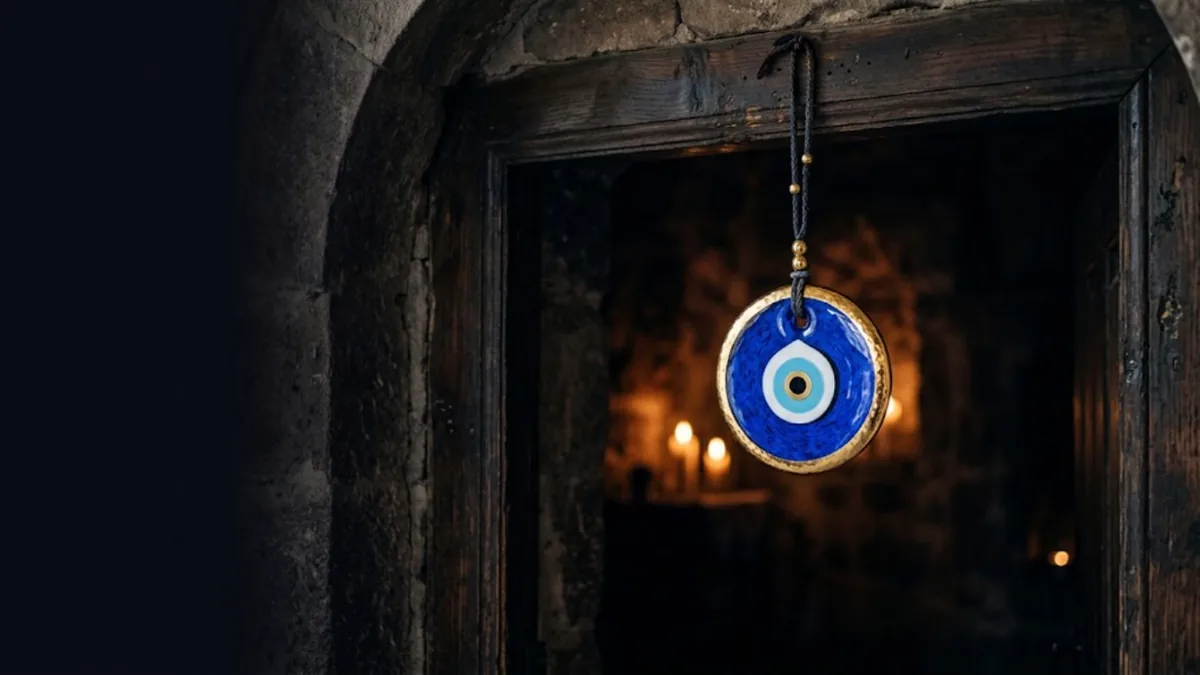
Someone looked at your new home, your child or your good news, and said it warmly. A few days later something felt off. Maybe you had a run of small setbacks, or you simply felt drained for no clear reason. Then your grandmother said one word: nazar.
You have heard the word all your life, but you may never have heard it explained. This guide covers the nazar meaning, where the idea comes from, how different cultures treat it, and the traditional signs people look for.
Quick answer
Nazar is a word for the evil eye. It comes from the Arabic word for “sight” or “look”, and it describes harm believed to follow an envious or admiring glance. In Islamic tradition the evil eye (al-ayn) is real, and it is answered with Quran, adhkar and trust in Allah. Blue eye beads are only a cultural symbol.
In this guide
Nazar meaning: what the word says
The word nazar (نظر) comes from Arabic, and it simply means sight, gaze or look. It travelled through Persian, Urdu, Hindi and Turkish, and in each language it kept the same core idea. A look can carry more than a look.
In everyday speech, the nazar meaning is closer to “the evil eye”. People say “nazar lag gayi” (the eye has touched it) or “nazar değmesin” (may no eye touch it). The phrase describes harm believed to follow a glance of envy or unguarded admiration.
Notice that the glance does not have to be hateful. Many traditions say the person may be a friend, a relative or even someone who loves you. Often they have no idea anything happened.
The idea is also far older than any single religion. Eye-shaped beads were worn around the Mediterranean and the Middle East long before Islam. Islam did not invent the concern, but it gave it a clear framework, which we cover below.
Nazar across cultures
Almost every region that knows the word has its own charm, saying and habit. The table below shows the most common ones. Practices vary from family to family, so treat it as a general picture, not a rulebook.
| Region | Name used | Common symbol | How it is used |
|---|---|---|---|
| Turkey | Nazar, nazar boncuğu | Blue glass eye bead | Hung at doors, on cars and cradles, pinned on babies, worn as jewellery |
| Greece | Mati (the eye), mataki | Blue eye charm, sometimes with garlic | Pinned on children, hung at home, and a light spit or “ftou ftou” after a compliment |
| Levant and Arab world | Al-ayn, nazra | Hamsa (khamsa) hand, blue bead | Hung in homes and shops; “Masha Allah” said after praise; ruqyah recited |
| South Asia | Nazar, nazar lagna | Black dot (kala teeka), lemon and chillies | Dot on a baby’s cheek or forehead; lemon and chillies at a doorway; a small ritual to “take off” the nazar |
| North Africa | L-ayn (Darija), al-ayn | Khamsa hand, incense (bkhour) | Khamsa at the entrance, incense in the home, and “Allah y7fdek” or “Masha Allah” after praise |
Look at the last column. Almost everywhere, the most common habit is a spoken one: a kind word said after a compliment. The object comes second. That fits with what the Islamic tradition teaches.
Children get the most attention in every culture on this list. A pretty baby draws compliments, so families pin a bead to the cradle or put a small dot on the cheek. It is a loving habit, and it shows how seriously people take a kind word.
Nazar evil eye: how Islam understands it
In Islam, the evil eye is not a folk story. The Prophet ﷺ said that the evil eye is true, and he taught believers to seek refuge in Allah from it. Scholars also point to Surat al-Qalam (68:51) when discussing the harm a look can do.
So the nazar evil eye is understood as a real but created and limited thing. It cannot act without Allah’s permission, and it is not stronger than His protection. That is why fear is never the goal.
The tradition also gives you a habit that helps both sides. When you admire something, say “Masha Allah” or ask Allah to bless it. This keeps the admiration clean, and it protects the person you are praising.
The Prophet ﷺ used to seek refuge for his grandsons with the words: “I seek refuge in the perfect words of Allah from every devil and every harmful creature, and from every harmful eye.” Parents still recite these words over children today.
A beaded charm is not part of the Islamic teaching itself. It is a cultural custom, and many scholars advise relying on Allah, not on an object. Our guide to evil eye protection explains what each tool really is. If you are wondering whether the blue bead is a sign of good luck, our article on whether the evil eye is good luck looks at that question.
Nazar symptoms: traditional signs you may have it
People often ask about nazar symptoms. There is no test, and no single sign proves anything. Traditionally, people describe a pattern, especially one that starts soon after being praised or envied. Here are the signs most often mentioned:
- A sudden heaviness or tiredness that appears after a big compliment or success
- A run of unrelated small setbacks in work, money or travel that started around the same time
- A baby or child who becomes unusually fussy, sleepless or unwell after being admired
- Repeated headaches or a feeling of pressure that comes and goes with no clear cause
- Sudden arguments or a cold feeling in a marriage or family that was calm before
- Something good, such as a business, a proposal or a plan, that stalls for no visible reason
- Feeling better after reciting ruqyah or adhkar, and worse when you stop
Now the important part. This can also be ordinary stress, sleep or health issues, so rule that out first. See a doctor if something physical is going on, and look honestly at your sleep, workload and worries.
Having one or two items on this list does not mean you have nazar. Most people will tick a few on a hard month. It is the timing, the pattern and how long it lasts that matter. For a fuller look, read our guide to the signs of the evil eye.
What is usually not a sign
A single bad day, a failed exam, a cold or a bout of shyness is not nazar. Neither is a friend who had praised you the week before a normal setback. Tradition asks for a pattern and for time. Without that, ordinary life is the more likely explanation, and it is kinder to yourself to think so.
If a pattern is real and it keeps returning, you can speak with Sheikh Kamal Elhidi about your situation. The Sheikh will tell you plainly what he sees, including when he sees nothing spiritual at all.
What people usually try — and why it often isn’t enough
Most families do the same few things. They hang a blue bead, wear a bracelet, burn incense, or ask an older relative to “take off” the nazar. Others simply say “Masha Allah” more often and avoid posting good news.
These habits have real value. Blessing what you see is a good manners rule, and reciting Ayat al-Kursi and the last three surahs is sound practice. Many people feel calmer after doing it, and calm matters.
The gap appears when the same thing keeps returning. A bead alone does not answer a specific situation, and general advice from the internet cannot see your circumstances. People then move from one remedy to the next without knowing what they are dealing with.
Some also drift into fear, checking every glance and blaming every bad day on someone’s eye. That helps nobody. If you want to act, our guide on how to remove the evil eye covers the traditional steps in a calm order.
Not sure what you’re dealing with?
Describe your situation to Sheikh Kamal Elhidi. He reads every message himself — free, private, and with no obligation.
How the Sheikh approaches it
Every case is different. Two people can describe the same tiredness or the same run of bad luck, and the reasons can be completely different. That is why the Sheikh does not start with a fixed answer.
He first asks about your situation: when it began, who was around, what changed, how you sleep and what you have already tried. These questions also help separate a spiritual cause from an ordinary one.
Then he says plainly what he sees. If it looks like the evil eye, he explains what that means and what is traditionally done. If it looks like stress or a health matter, he says so and points you to the right help.
There are no dramatic claims and no promises of a result. You get a calm, honest reading of your case, grounded in the Quran and the Sunnah, and clear next steps you can follow at home.

About the Sheikh. Sheikh Kamal Elhidi is a practitioner of traditional ruqyah and spiritual diagnosis. Every article on this guide is written with his direct guidance and reviewed with him before publishing. Learn more about the Sheikh and how he works.
Nazar: a practical safety note
Persistent physical or emotional symptoms can have ordinary causes. Use spiritual guidance alongside qualified professional care, and review the World Health Organization guidance on stress.
Curious what this brings up in your own life? After the Islamic background above, some readers enjoy a calm, unhurried conversation about their own questions and circumstances, and our partner PuraTarot offers this as a full personal reflection session, a personal reflection, not a diagnosis or a treatment. For the spiritual side, follow the steps above and the Sheikh’s guidance. Join the free Curse Removal Guide newsletter and, once you confirm, you will unlock a 50% code for your first PuraTarot session.
Frequently asked questions
What does nazar mean?
Nazar comes from the Arabic word for sight or gaze. In everyday use it means the evil eye: harm that is traditionally believed to follow a glance of envy or unguarded admiration. The word is used in Arabic, Turkish, Persian, Urdu and Hindi, and it is often said aloud after a compliment to keep things safe.
Is nazar the same as the evil eye?
In practice, yes. Nazar is the South Asian, Turkish and Persian word, and al-ayn is the Arabic one, but both describe the same idea of a harmful glance. In Islam the evil eye is treated as real, and the answer is Quran, adhkar and trust in Allah, not fear.
Is the nazar bead Islamic?
The blue eye bead is a cultural custom that is older than Islam. It is not part of the Islamic teaching, and many scholars advise relying on Allah, not on an object. People still wear it as a reminder or a tradition. The recommended protection is Ayat al-Kursi, the last three surahs and the daily adhkar.
How do I know if I have nazar?
No test can prove it. Traditionally people look for a pattern that began soon after praise or envy, such as sudden heaviness, stalled plans or a fussy child. Always rule out stress, poor sleep and health causes first. If the pattern is real and repeats, a Sheikh can listen to your situation and advise you.
Can nazar affect babies and children?
Traditionally, yes. Many families worry most about babies, because they are admired often. A baby who becomes fussy after being praised is often blamed on nazar, but hunger, teething and illness are far more common. Check with a doctor first, then use the daily protective words and say “Masha Allah” when others admire your child.
Further reading
- The Evil Eye: A Casebook: scholarly essays on how the evil eye is understood across world cultures.
- Healing with the Medicine of the Prophet: classical reflections on the Prophet’s guidance on the evil eye and healing.
- The Clear Quran by Dr. Mustafa Khattab: a clear modern English translation to read the relevant verses in context.
As an Amazon Associate we earn from qualifying purchases.
What the Sheikh usually prescribes for this
There is no single remedy that fits every case — the same signs can come from the evil eye, from sihr, or from nothing spiritual at all. That is why Sheikh Kamal Elhidi always asks about your situation first, then tells you plainly what he sees and what he would do.
If you would like his view on your own case, describe it below. He reads every message himself — free, private, and with no obligation.
Reader reviews
Did this guide help you? Leave a short, honest review so other readers know what to expect. Reviews are checked before they appear.
There are no reviews yet. Be the first one to write one.


