
The Evil Eye in Different Cultures: Greek Mati, Turkish Nazar, Italian Malocchio, Mal de Ojo and the Islamic Ayn
The same fear, under a dozen names, with a dozen remedies. Here is how the evil eye is understood in Greek, Turkish, Italian, Latin American, Jewish, Persian, Indian and Islamic culture, what each uses against it, and what the Islamic tradition keeps and leaves.
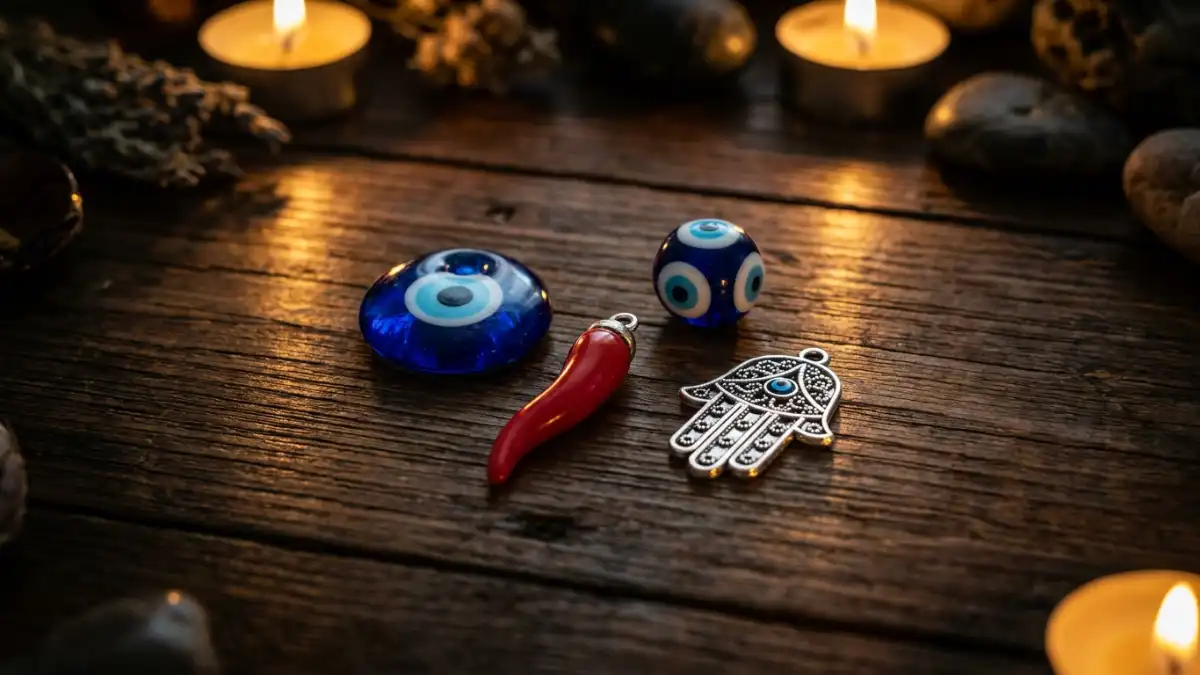
A Greek grandmother drops oil into water and watches whether it spreads. A Mexican mother rolls an egg over her feverish baby. An Italian man makes a horn with his fingers behind his back. A Turkish shopkeeper hangs a blue eye over the door, and a Moroccan one says mashallah before he praises your child. They are all doing the same thing: guarding against the evil eye, which may be the most widely shared belief in human history. This guide tours the evil eye in different cultures, Greek mati, Turkish nazar, Italian malocchio, Latin American mal de ojo, Jewish ayin hara, Persian cheshm zakhm, Indian nazar and the Islamic ayn, with the remedies each uses, and ends with what the Islamic tradition keeps from all of this and what it leaves.
Quick answer
The evil eye appears under different names in almost every culture around the Mediterranean, the Middle East, South Asia and Latin America: Greek mati, Turkish nazar, Italian malocchio, Spanish mal de ojo, Hebrew ayin hara, Persian cheshm zakhm, Hindi nazar, Arabic al-ayn. All share the belief that an envious or admiring look can cause harm, and each has its own charms and cures: blue eyes, horns, red strings, oil in water, egg cleansings, chilli and lemon. The Islamic tradition confirms the eye is real and replaces the charms with remembrance, specific verses and the washing of the one who gave it.
In this guide
One belief, many names
The evil eye is older than every religion that mentions it. Eye-shaped amulets appear in Mesopotamia and Egypt thousands of years ago, the Greeks and Romans wrote about it, and the belief travelled with trade, conquest and migration until it reached almost every continent. What is striking is how little the core changes: visible good fortune attracts envy, envy can harm through a look, and the harm shows as sudden, unexplained misfortune. The full definition is in our guide to evil eye meaning; here is how it looks in each culture.
| Culture | Name | Who is most at risk | Classic protection | Classic cure |
|---|---|---|---|---|
| Greek | Mati (the eye), vaskania | Babies, the beautiful, the successful | The blue eye charm (mataki), spitting lightly three times (ftou ftou ftou) after a compliment | Xematiasma: a prayer by an elder, often with drops of oil in water; if the oil spreads or sinks, the eye is present |
| Turkish | Nazar, kem göz | Babies, brides, new homes and cars | The nazar boncuğu, the blue and white glass eye, on doors, cradles, cars and bodies | Saying mashallah, lead pouring (kurşun dökme) by an elder over the afflicted |
| Italian | Malocchio | Children, the newly fortunate | The cornicello (red horn), the mano cornuta (horn gesture), the mano fica | Oil in water read by a strega or an elder, with whispered prayers passed down on Christmas Eve |
| Spanish and Latin American | Mal de ojo | Babies above all | A red bracelet or an azabache (jet) charm on the baby, touching the child you admire | Limpia con huevo: an egg rolled over the body, then cracked into water and read |
| Jewish | Ayin hara | Children, the successful; one does not count people or boast | The phrase bli ayin hara, a red string from Rachel’s tomb, the hamsa | Prayer, reciting the verse that Joseph’s descendants are above the eye |
| Persian | Cheshm zakhm, cheshm-e bad | Babies, newlyweds, the admired | Burning esfand (wild rue) seeds and circling the smoke over the person | Esfand with a rhyme, and prayer |
| Indian and Pakistani | Nazar, buri nazar, drishti | Babies, brides, new businesses | A black dot (kala tikka) on a child’s face, lemon and green chillies hung at the door, black thread | Circling salt, chillies or an egg over the person and discarding them; reciting prayers |
| Arab and Islamic | Al-ayn, hasad | Anyone with a visible blessing | Saying mashallah, the morning and evening adhkar, Ayat al-Kursi and the three surahs | Ruqyah with the Quran; the washing water (ghusl) of the one who gave the eye poured over the afflicted |
Lay the table out and the shape is obvious: in every culture the newborn, the bride and the newly successful are the ones at risk, because they are the ones most looked at; every culture has a way to deflect the look, and every culture has an elder who diagnoses and cures. The names change; the human experience underneath does not.
The charms: blue eyes, horns, red strings and hands
The protective objects are the part of the belief most people meet first, and they fall into a few families.
- The eye that looks back. The Greek mataki and the Turkish nazar bead: a blue eye that absorbs or returns the glance. Blue because light eyes were rare in the ancient Mediterranean and thought to give the eye. See what is nazar and is the evil eye good luck.
- The hand. The hamsa, hand of Fatima, Miriam or Mary, an open palm often with an eye in the centre, across North Africa, the Middle East and the Jewish world. See hamsa hand meaning.
- The horn. The Italian cornicello, a red twisted horn, and the horn gesture made with the fingers, going back to the fertility and strength of the bull.
- Red. Red strings, red bracelets, red coral and jet for babies, in Jewish, Latin American and Mediterranean homes; red as the colour that distracts or repels the eye.
- Black. The black dot on a child’s cheek in South Asia, deliberately spoiling perfection so that there is nothing perfect to envy; black thread on the wrist.
- Plants and smoke. Rue in Persia and Italy, garlic in Greece, chillies and lemon in India, hung at thresholds or burned.
What they share is the logic of deflection: give the envious eye something to look at, or spoil the thing it would envy. What none of them claims, in their own traditions, is to cure the eye once it has landed; for that, every culture turns to prayer and to an elder.
The cures: oil, eggs, lead and water
The diagnoses and cures are where the cultures are most inventive, and most similar.
- Oil in water (Greek, Italian). An elder drops olive oil into a bowl of water while praying. If the oil stays in beads, there is no eye; if it spreads, dissolves or sinks, the eye is present, and the prayer continues until it beads. The prayer is passed from one generation to the next, often only on a particular night.
- The egg (Latin American, South Asian). A raw egg is rolled over the body of the afflicted, especially a child, then cracked into a glass of water. The patterns in the white are read: an eye shape, threads or bubbles mean the eye was drawn out. The egg is discarded away from the home.
- Lead pouring (Turkish, Balkan). Molten lead is poured into water held over the head of the afflicted; the shapes it takes are read and the fear or the eye is said to leave with the hiss.
- Salt and chillies (South Asian). Circled three or seven times over the person and thrown into fire or water; if the chillies do not smell when burned, the eye was present.
- Washing (Islamic). The one suspected of giving the eye is asked to wash, and the water from his washing is poured over the back of the afflicted. This is from the Sunnah, and it is the only cure in this list with a direct instruction from the Prophet ﷺ.
Every one of these has an elder, a prayer, water, and a reading of signs. The Islamic tradition recognises the human need behind them, and then does something the others do not: it names which parts are from God and which are from people.
What the Islamic tradition keeps, and what it leaves
Islam did not invent the evil eye and does not deny it. The Prophet ﷺ said: “The evil eye is real, and if anything were to overtake the divine decree, it would be the evil eye”, and the Quran teaches refuge from “the evil of an envier when he envies”. So the tradition keeps the belief, keeps the attention to babies, brides and blessings, and keeps the practice of blessing what you admire: mashallah, tabarakallah is the Islamic form of the Greek spit and the Italian horn, and it is the only one of them with no object.
What it leaves is the charm. The Prophet ﷺ forbade amulets, and the scholars read the blue eye, the horn, the red string and the hand as objects with no power of their own, which a Muslim should not rely on. In their place the tradition gives what is free and in every Quran: the morning and evening adhkar, Ayat al-Kursi and the three surahs, the dua for the evil eye, and, when the eye has landed, ruqyah and the washing. The comparison of all of these with what a Sheikh uses is in evil eye protection.
It also leaves the fortune-telling. Reading oil, eggs, lead or chillies to diagnose the eye is, in the Islamic view, guessing dressed as knowledge, and sometimes a door to things worse than the eye. The Sheikh diagnoses the way the Prophet ﷺ taught: from the story, the signs and the reaction to recitation. If you suspect the eye has touched you or your child, read the signs of evil eye, and if the pattern fits, describe it to Sheikh Kamal Elhidi on the consultation page. He will tell you plainly whether it is the eye, something heavier, or nothing spiritual at all.
Not sure what you’re dealing with?
Describe your situation to Sheikh Kamal Elhidi. He reads every message himself — free, private, and with no obligation.
How the Sheikh approaches it
Many of the people who write to the Sheikh come from families that used eggs, oil or lead for generations, and he does not mock any of it. He understands the fear and the love behind those rituals; they are the same fear and love the Sunnah addresses. He simply explains where the tradition draws its line: the belief and the blessing are kept, the objects and the fortune-telling are left.
Then he does what the elders in every culture were trying to do, with the method the Prophet ﷺ gave: he listens to the story, looks at the signs, notes the reaction to recitation, and prescribes the recitations and, where possible, the washing. He does not sell charms, does not read eggs or oil, and does not frighten anyone with the word envy.

About the Sheikh. Sheikh Kamal Elhidi is a practitioner of traditional ruqyah and spiritual diagnosis. Every article on this guide is written with his direct guidance and reviewed with him before publishing. Learn more about the Sheikh and how he works.
Curious how these old beliefs speak to your own life? Our partner PuraTarot offers a full personal reflection session, the Full Personal Reading, a quiet space to think about your feelings, your relationships and your choices. It is a personal reflection, not a diagnosis or a treatment, so for the spiritual side, follow the guidance above and the Sheikh’s counsel. Join the free Curse Removal Guide newsletter and, once you confirm, you will unlock a 50% code for your first PuraTarot session.
Frequently asked questions
What is the evil eye called in different cultures?
Mati in Greek, nazar in Turkish, Hindi and Urdu, malocchio in Italian, mal de ojo in Spanish, ayin hara in Hebrew, cheshm zakhm in Persian, and al-ayn or hasad in Arabic. The belief is the same in all of them: an envious or admiring look can cause harm.
What is the Greek evil eye and how is it removed?
The Greek mati is the belief that envy or excessive admiration causes illness or misfortune. Protection is the blue eye charm and spitting lightly three times after a compliment. The cure, xematiasma, is a prayer by an elder, often with drops of oil in water: if the oil spreads or sinks, the eye is present.
What is mal de ojo and the egg cleansing?
Mal de ojo is the Latin American evil eye, feared most for babies, who wear a red bracelet or jet charm. The cure is the limpia con huevo: a raw egg rolled over the body, cracked into water, and read for eye shapes, threads or bubbles that show the eye was drawn out.
What is the Islamic view of evil eye charms like the nazar and the hamsa?
Islam confirms the evil eye is real but forbids amulets, so the blue eye, the horn, the red string and the hamsa are seen as objects with no power that a Muslim should not rely on. Protection is saying mashallah, the daily adhkar, Ayat al-Kursi, the three surahs and the duas of the Prophet ﷺ.
How does Islam cure the evil eye compared with other cultures?
Other cultures diagnose with oil, eggs, lead or chillies and cure with a prayer by an elder. Islam diagnoses from the story, the signs and the reaction to Quran recitation, and cures with ruqyah and with the washing water of the one who gave the eye, which comes directly from the Sunnah.
Further reading
- The Evil Eye: A Casebook: Alan Dundes’s collection of scholarly essays on the evil eye across cultures.
- Healing with the Medicine of the Prophet: Ibn al-Qayyim on Quranic and Prophetic healing, including the evil eye and sihr.
- Fortress of the Muslim (Hisn al-Muslim): Authentic supplications from the Quran and Sunnah for morning, evening and daily life.
As an Amazon Associate we earn from qualifying purchases.
What the Sheikh usually prescribes for this
There is no single remedy that fits every case — the same signs can come from the evil eye, from sihr, or from nothing spiritual at all. That is why Sheikh Kamal Elhidi always asks about your situation first, then tells you plainly what he sees and what he would do.
If you would like his view on your own case, describe it below. He reads every message himself — free, private, and with no obligation.
Reader reviews
Did this guide help you? Leave a short, honest review so other readers know what to expect. Reviews are checked before they appear.
There are no reviews yet. Be the first one to write one.


