
Protection Spell: What It Is, Types and When You Need One
People search for a protection spell for many reasons. This calm guide explains the idea, the traditional Islamic equivalent, and when you might need stronger protection.
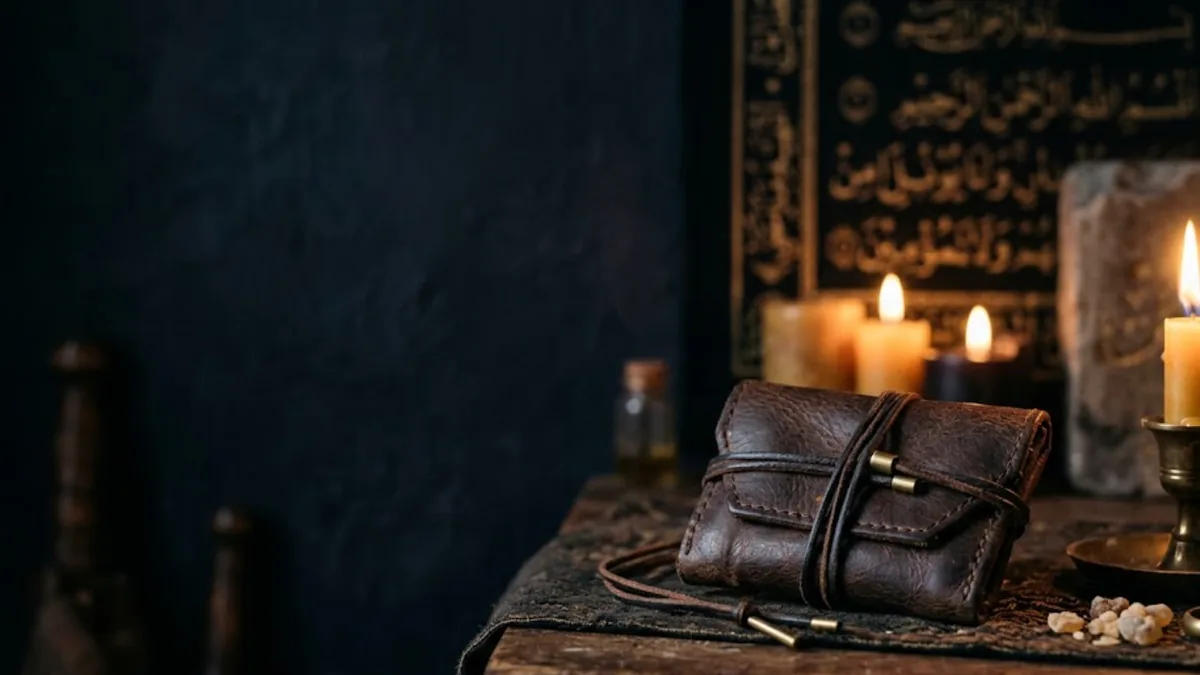
Maybe things have felt heavy lately. A run of bad luck, a home that feels uneasy, or a worry you cannot explain has you typing “protection spell” into a search box late at night. You are not alone, and you are not foolish. Wanting to feel safe is one of the oldest human instincts.
This guide explains what a protection spell means, what the traditional Islamic equivalent looks like, and how to tell when everyday protection is enough. It is calm and honest, with no fear and no promises.
Quick answer
A protection spell is an attempt to guard yourself, your home or your family from harm using words, objects or rituals. In the Islamic tradition the equivalent is not a spell. It is words of refuge: Ayat al-Kursi, the three Quls, daily adhkar, ruqyah and, for some scholars, verse-based taweez. All of it depends on Allah, not on the ritual itself.
In this guide
What is a protection spell?
A protection spell is a ritual meant to keep harm away. People use the phrase for very different things: candles and salt, charms and amulets, spoken blessings, prayers in their own tradition. The common thread is the wish for a sense of safety when life feels unsafe.
Searchers come from every background. Some grew up with a grandmother who hung a charm above the door. Some are curious after a hard year. Others are Muslims who simply want to know what is permitted and what is not, and that is a very good question to ask.
The words people use also overlap. You will see spiritual protection, a protection ritual, or protection from negative energy, all meaning roughly the same hope. Traditions differ on how they answer it, and it is fair to say so plainly.
One honest note first. Tiredness, anxiety, poor sleep and health problems can feel exactly like “negative energy”. This can also be ordinary stress, sleep or health issues, so rule that out first. If in doubt, speak to a doctor before anything else.
The Islamic equivalent of a protection spell
In Islam, protection is not cast on the world. It is asked for from Allah. The Prophet ﷺ taught specific words of refuge and encouraged his followers to recite them every day. This is seeking refuge, not casting a spell, and the difference matters.
A spell, as most people imagine it, puts the power in the ritual: say the right words, light the right candle, and the result follows. In the Islamic view the words are a prayer. The outcome belongs to Allah alone, and no recitation acts as a guarantee.
Here is how the main forms compare, so you can see where each comes from and where its limits lie.
| Type of protection | Tradition | What it involves | Limits |
|---|---|---|---|
| Words of refuge | Quran and Sunnah: Ayat al-Kursi, Surat al-Ikhlas, al-Falaq, an-Nas | Reciting them in the morning, evening and before sleep | Works through steady habit and trust in Allah. Not a guarantee, and not a substitute for solving real problems. |
| Daily adhkar | The Sunnah, collected in books such as Hisn al-Muslim | Short daily remembrance, plus words before leaving home and before sleep | Needs consistency. A rushed recitation with a worried heart helps less than a calm, present one. |
| Ruqyah | Recitation of the Quran and authentic supplications, with permitted conditions | Recited over yourself or by a trusted person, with understood words and no shirk | Must contain nothing forbidden and rely on Allah alone. It does not diagnose medical illness. |
| Taweez | Traditional written protection, often Quranic verses; scholars differ on its ruling | Verses written with sincere intention, kept or worn | Some scholars allow verses only, others discourage it. It must never replace prayer or carry unclear symbols. |
| Home and personal cleansing | Recitation of Surat al-Baqarah and daily remembrance at home | Reciting or playing it at home, keeping the space clean and prayerful | Supports the household routine. It is not a separate ritual with power of its own. |
Look at the pattern in the table. The closer a form is to the Quran and Sunnah, the stronger its footing. If you want a full daily routine, our guide to evil eye protection lays one out step by step.
Why the Sheikh does not cast spells
Sheikh Kamal Elhidi does not cast spells, and he does not offer them. What he uses is traditional protection: recitation from the Quran, words of refuge, and guidance rooted in the Islamic tradition of ruqyah. That is a deliberate choice, not a matter of wording.
The reason is simple. Anything that asks for help from other than Allah is not protection. It opens the door to what a person is trying to close. Traditional teachers warn against spells, hidden symbols and unclear words for exactly this reason.
Written protection is a separate subject with its own care. If you are curious about it, read what a taweez is and how it is used, where scholarly differences are explained honestly.
The same idea applies to your home and your inner life. Our guide to spiritual cleansing shows how traditional remembrance and simple habits help a space, and a person, feel lighter.
When you might need stronger protection
For most people, daily words of refuge and a calm routine are enough. A protection ritual done regularly builds steadiness. But sometimes you have done all that and still feel stuck, and that is when a person with knowledge can help.
Read this checklist slowly. Having one item on it does not mean anything is wrong. It is a prompt to look closer, not a diagnosis.
- You have kept up daily protection for several weeks, and the same heaviness returns.
- The pattern is specific: it starts around one person, one place or one event.
- Several unrelated things in one area of life (family, money, health, work) keep going wrong together.
- You feel a strong aversion to prayer or to hearing the Quran that you cannot explain.
- You have already seen a doctor, and ordinary causes such as stress, sleep or health have been checked.
- You are being offered a “spell”, a charm or a ritual by a stranger who asks you to keep it secret.
- You feel too worried to sleep, and the worry is growing instead of easing.
The last two points deserve extra care. If someone pressures you, asks for secrecy or urgency, or promises a certain result, step back. That is never how genuine traditional protection works. You can browse more in our taweez and protection section.
What people usually try — and why it often isn’t enough
Most people start with what is easy: a candle, a charm from a shop, a video of a ritual, or a spell copied from a website. Some buy an amulet online. Others recite a few verses when they remember. These steps come from a good place, and the recitation in particular has real value.
The trouble is that a generic ritual cannot know your situation. A charm cannot tell whether you are dealing with envy, with worry, with something else, or with nothing spiritual at all. And copied words from an unknown source may contain things you would never knowingly say.
That is why so many people feel they have tried everything and still feel unsafe. Protection is the foundation, but understanding your own case is the missing piece. Without it, you keep adding rituals without knowing what you need.
Not sure what you’re dealing with?
Describe your situation to Sheikh Kamal Elhidi. He reads every message himself — free, private, and with no obligation.
How the Sheikh approaches it
Every case is different, so the Sheikh does not give the same answer to everyone. He begins by asking about your situation first: what you have noticed, since when, how your sleep and days look, and what else is happening in your life. He listens before he says anything.
Then he tells you plainly what he sees. Sometimes it is a spiritual matter that needs traditional protection. Sometimes it is ordinary stress or something a doctor should look at, and he will say that too. He does not promise outcomes and he does not try to frighten you.
His guidance follows the Islamic tradition of ruqyah and remembrance, explained in simple terms so you know exactly what to do next. If you would like that conversation, you can consult the Sheikh and describe your situation in your own words.

About the Sheikh. Sheikh Kamal Elhidi is a practitioner of traditional ruqyah and spiritual diagnosis. Every article on this guide is written with his direct guidance and reviewed with him before publishing. Learn more about the Sheikh and how he works.
Protection Spell: a practical safety note
Persistent physical or emotional symptoms can have ordinary causes. Use spiritual guidance alongside qualified professional care, and review the World Health Organization guidance on stress.
Want to feel steadier in your own life? Our partner PuraTarot offers a personal reflection session, the Grounding and Personal Boundaries Ritual, for thinking through the boundaries and routines that help you feel settled. It is a personal reflection, not a diagnosis or a treatment; for the spiritual side, follow the guidance above and the Sheikh’s. Join the free Curse Removal Guide newsletter and, once you confirm, you will unlock a 50% code for your first PuraTarot session.
Frequently asked questions
What is a protection spell?
A protection spell is a ritual meant to guard a person, home or family from harm, using words, objects or actions. Traditions differ widely. In Islam the equivalent is not a spell but seeking refuge in Allah through Quran recitation, daily adhkar and ruqyah. The power is understood to belong to Allah alone, not to the ritual.
Is a protection spell allowed in Islam?
Spells that call on anyone other than Allah, or use unclear words and symbols, are not permitted in the Islamic tradition. What is encouraged is ruqyah with the Quran and authentic supplications, and daily words of refuge. Scholars require that the words be understood, contain no shirk, and that trust rests in Allah.
What is the Islamic protection from negative energy?
Islam does not use the phrase negative energy, but it teaches clear protection from harm: Ayat al-Kursi, Surat al-Ikhlas, al-Falaq and an-Nas, and the morning and evening adhkar. These are recited daily with trust in Allah. They are a habit of remembrance, and no recitation is a guaranteed result.
How can I protect my home spiritually?
Traditionally, people keep their home a place of prayer and remembrance: they recite Surat al-Baqarah, say Bismillah on entering and leaving, keep Ayat al-Kursi in their evening routine, and avoid what displeases Allah. A calm, clean home also helps. None of this is a guarantee, and it works alongside ordinary care.
How do I know if I need stronger protection?
Consider it if daily protection has not eased a specific, repeating pattern, and a doctor has ruled out ordinary causes like stress or poor sleep. Be careful with anyone who promises results or demands secrecy. A knowledgeable person can listen to your situation and say plainly whether it is spiritual or not.
Further reading
- Fortress of the Muslim (Hisn al-Muslim): Du’as for morning, evening and daily life, drawn from the Quran and Sunnah.
- The Book of Remembrances (Kitab al-Adhkar): Imam an-Nawawi’s collection of authentic daily remembrances and supplications.
- The Clear Quran: A clear English translation for reading the verses behind Islamic remembrance.
As an Amazon Associate we earn from qualifying purchases.
What the Sheikh usually prescribes for this
There is no single remedy that fits every case — the same signs can come from the evil eye, from sihr, or from nothing spiritual at all. That is why Sheikh Kamal Elhidi always asks about your situation first, then tells you plainly what he sees and what he would do.
If you would like his view on your own case, describe it below. He reads every message himself — free, private, and with no obligation.
Reader reviews
Did this guide help you? Leave a short, honest review so other readers know what to expect. Reviews are checked before they appear.
There are no reviews yet. Be the first one to write one.


